Nuclear Singapore
What if Singapore goes nuclear?
When history goes critical
As we consider nuclear power, here are some of the lessons we should learn from the past.
The Anthropocene
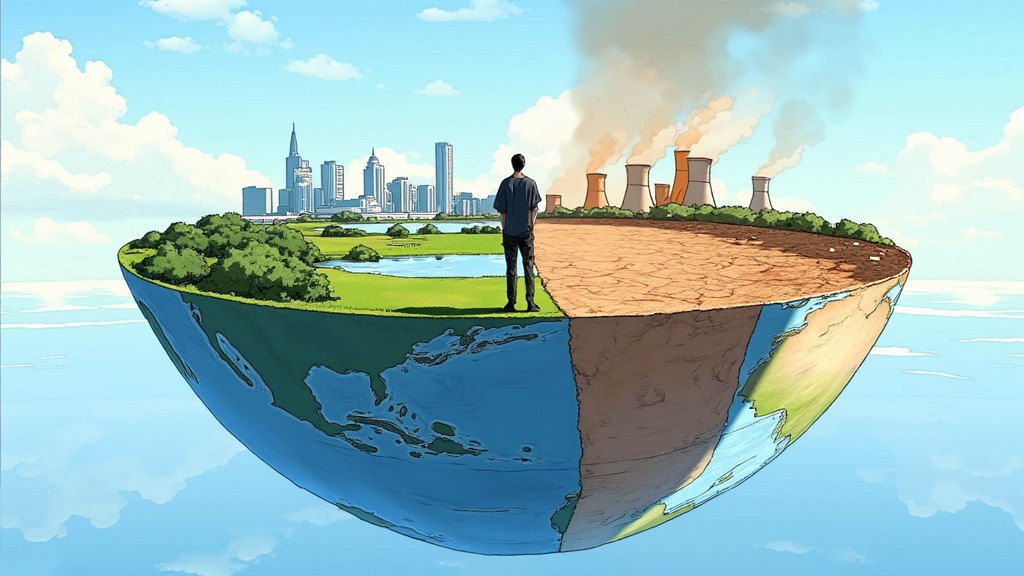
The advent of nuclear technology coincides with the phenomenon known as the Great Acceleration, which is the dramatic and exponential surge in human activity that has visible and tremendous impact on the global environment. The Great Acceleration also marks the beginning of the Anthropocene epoch, though several scholars point to the burning of coal in the Industrial Revolution of the 18th century as the actual origins, particularly the advent of James Watt’s steam engine in 1784.[^30]
Regardless, the Anthropocene—defined as the geological epoch during which human activity becomes the dominant influence on the global climate and environment—remains an important term used in environmental humanities, even if it has yet to be officially recognized (we’re still in the Holocene). Even so, they acknowledge that the Anthropocene remains an invaluable descriptor in understanding the relationship between humans and the environment.[^31] What interests me is that while discussion around the Anthropocene is primarily centered on the increase in carbon content and carbon dioxide emissions, along with other greenhouse gases that lead to climate change and global warming, the spike in human activity that impacted the environment during the Great Acceleration also includes nuclear weapons testing, especially the hydrogen bomb experiments in the 1950s. The radioactive fallout is just as significant a marker of environmental impact by human activities as the burning of fossil fuels and carbon emissions. The Anthropocene Working Group also proposed a boundary marker at Crawford Lake, pointing toward the release of plutonium from hydrogen bomb tests during the 1950s.[^32]
The Anthropocene has spawned more perspectives in environmental humanities on how we should examine the relationship between humanity and the environment, such as Donna Haraway’s Chthulucene, which focuses on interspecies relationships and vast biodiversity that eliminates an ecological hierarchy where humans are ranked at the top. Similarly, Timothy Morton’s concept of the hyperobject is a way to explain how humans attempt to conceive an entity so vast and beyond human comprehension (such as Cthulhu, who can be used as an example of how we interpret hyperobjects as a cosmic horror of astronomical scale). The world doesn’t belong to us alone.
And radiation—nuclear power—can also be understood as a hyperobject. Radioactive materials such as uranium and plutonium have extremely long half-lives, extending to thousands or even billions of years, far beyond the lifespan of any human. To try and grasp this hyperobject of radiation, we often conceive it as monstrous—that is where films such as Godzilla or other kaiju movies, nuclear dystopian games, and science fiction novels and animations come in useful, as they tell us about humanity’s attempts to imagine the hyperobject known as radiation in a physical form we can find understandable.
The concept of hyperobjects is useful in understanding public perception. For most people, radiation is invisible and hard to imagine. However, the visceral image of a cancer patient in a hospital bed is instantly recognizable and sticks with them, and it is this image that is often associated with radiation. Similarly, most people will not conceive of nuclear power at the subatomic scale where microscopic particles collide to fuse into new elements, or split apart. Instead, whenever nuclear power is mentioned, the first thing that comes to most people’s minds is the iconic mushroom cloud billowing above Hiroshima or the Marshall Islands. It is this traumatic sight that seared itself into the public psyche. It is the narratives of the Hibakusha that linger in humanity’s minds whenever it comes to the topic of nuclear.
Hibakusha
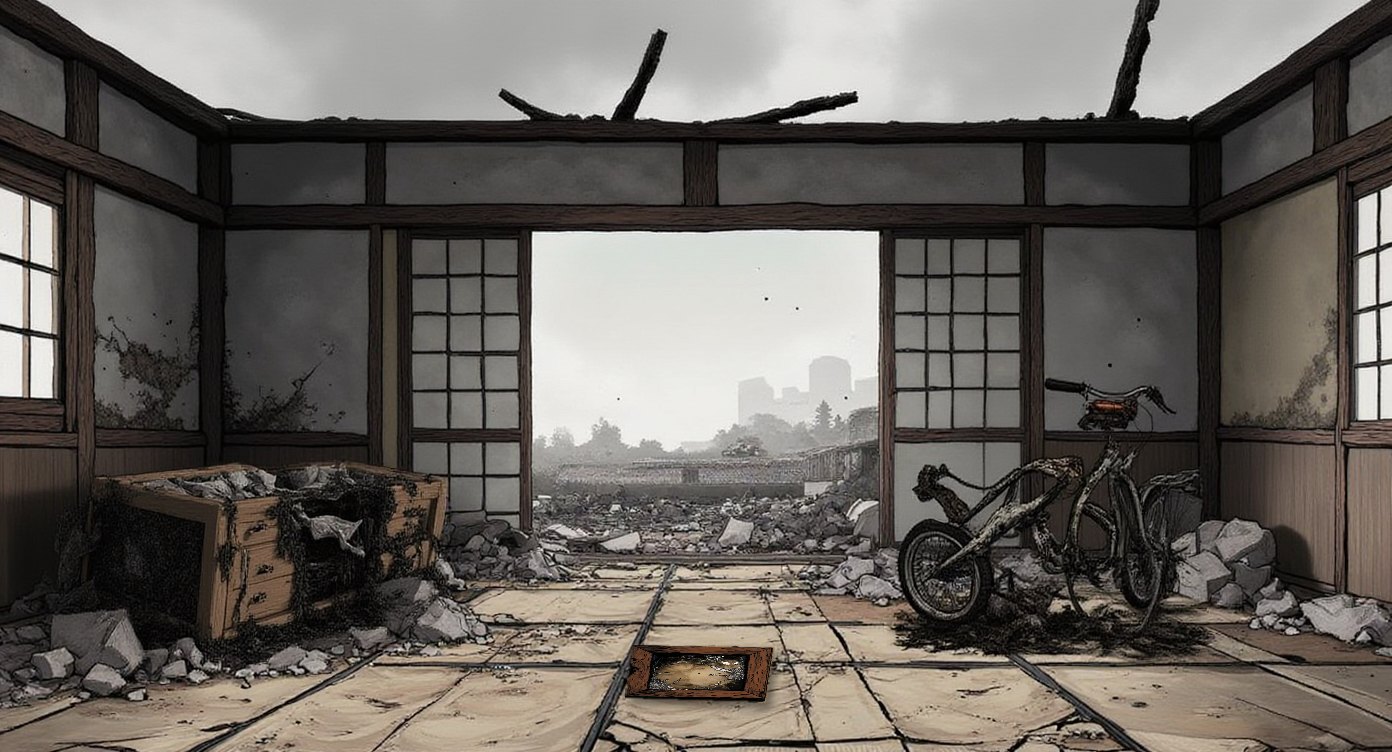
As we consider the pursuit of nuclear technology to combat climate change, we should also consider why the public may be resistant to it. Such resistance and reticence are best expressed in Hibakusha narratives—stories of the victims of nuclear weapons and radioactive disasters and how they attempt to cope with such an overwhelming catastrophe. The trauma has been seared into their psyches, and the way the use of nuclear weapons and radioactive disasters are remembered often shapes how the technology is perceived.
They provide clear lessons on how to proceed. Public memory is a powerful force that can influence the trajectory of national policies, and any advancement must be executed with delicacy and respect for those who have suffered the calamitous effects of such fearsome technology. Imagine if I had named this page “Radioactive Singapore” instead. That would elicit a far more negative impression from the public, wouldn’t it? Words come with power, especially the meaning and memories that suffuse them.



Small modular reactors
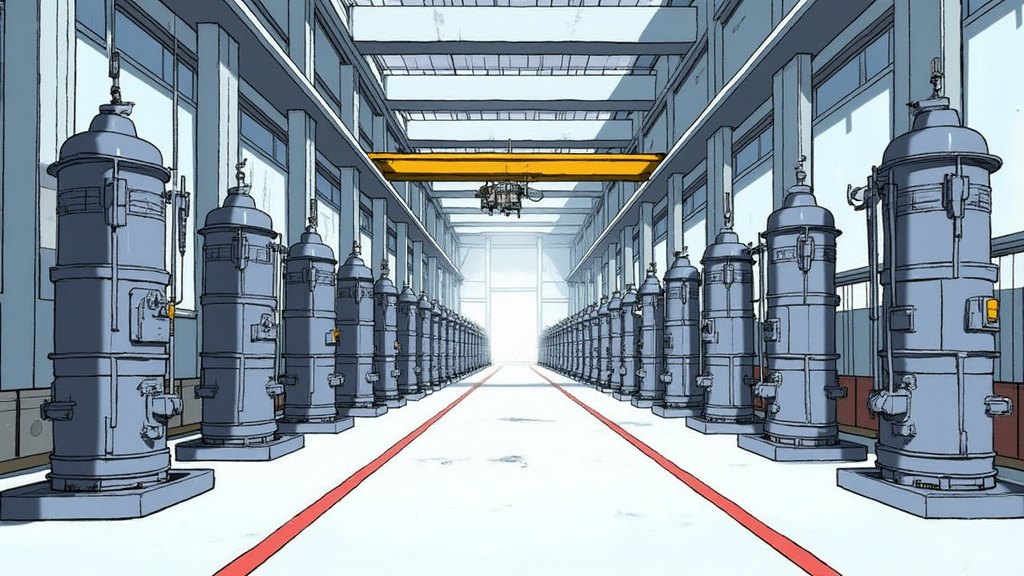
Singapore is exploring the option of nuclear power because our aim is sustainable development. Compared to the carbon emissions from our current fossil fuel-based power, nuclear promises cleaner energy with no carbon emissions.
We have a limited range of options for alternative energy sources. Solar energy is currently being rolled out, but the current technology hasn’t allowed us to rely solely on it. Our geographical location means wind power is not dependable, and our lack of natural resources means we have no feasible access to hydroelectricity.
However, given the history of nuclear disasters above, it is essential that we do not plunge into nuclear power recklessly. An accident would be catastrophic, especially given our tiny territory. A 30 kilometer exclusion zone means most of our densely populated country has to be evacuated, and where would we house the evacuees? This is primarily the reason why, for decades, Singapore has never adopted nuclear power.
Fortunately, nuclear technology has continued to advance and improve. Currently, the development of small modular reactors has made it feasible for Singapore to cautiously proceed on a new path. Compact and scalable, small modular reactors are only a fraction of the size of conventional nuclear reactors, yet they are able to generate up to 300 megawatts per unit. They are safer, equipped with advanced features, such as passive safety systems to reduce risk of accidents, and contain significantly less radioactive fuel. That means, unlike Fukushima, there will be less decay heat to manage if the reactor does have a meltdown. Furthermore, they can be prefabricated for easier transport and installation.
However, the disposal of nuclear waste remains a huge problem in land-scarce Singapore. Worse, a study by Krall, Macfarlane and Ewing discovered that small modular reactors produce between 2 to 30 times more waste per unit of energy than large reactors.[^33] Current options consist of either storage of nuclear waste in a spent fuel pool for between five to fifteen years before sending it to other countries to be extracted, or burying and sealing the nuclear waste in a 2km deep hole.[^34] Perhaps we can explore technology to neutralize radioactive waste, such as nanotechnology. In fact, Belgium’s MYRRHA project is an example of how particle accelerators can transmute waste with long half-lives into shorter-lived material.[^35] Though it’s not ready, perhaps it will be in the future.
Furthermore, Singapore will possibly be able to construct offshore or underground nuclear facilities. This would also mitigate the calamitous effects if any accidents do occur. Theoretically, anyway. In any case, I do think it’s important to consider these three approaches when thinking about nuclear power.
Secure safeguards
Prioritize safety above all.
Combat complacency
Stay vigilant and ensure all measures are in place to prevent accidents.
Reactive response
Have emergency protocols in place to swiftly respond to any issues.
A hypothetical exclusion zone
What happens if a nuclear accident occurs in Singapore? Here’s a theoretical extrapolation of what emergency zones look like.
Drag the reactor to anywhere on the map.[^36][^38] Currently, the 4,231,500 residents figure is from June 2026, and covers only Singaporean citizens and permanent residents.[^37] You can switch between the conventional reactor and the small modular reactor, and the latter’s zone is based on NuScale’s approved target of an emergency zone, 0.5 km, in case of any incident.[^39] However, the limitations mean that densely populated places like Changi Airport, Jurong Island, and other non-residential areas are not indicated in the map.
Don’t waste heat waste
All said and done, nuclear reactors—even small modular reactors—generate immense quantities of excess heat, especially when compared to fossil fuel plants. A nuclear reactor has an approximately 33% efficiency of converting heat to electricity, but the rest becomes waste heat that requires water coolant.[^40] In contrast, modern fossil fuel plants are more efficient, being able to convert about 50% of their fuel to electricity.[^41] This leads to less waste heat. Furthermore, some of the waste heat is emitted from the chimney and into the air instead of water. While we strive for a net-zero emissions goal, which is why we’re considering the nuclear alternative, I would like to raise the issue of the urban heat island effect, and Singapore’s rising temperatures since the 1960s.
I’m exploring options to see if there’s a way to make use of waste heat for productive purposes. I hope, by tackling this problem, I can contribute to heat resilience in Singapore. It might seem strange to seriously consider the nuclear option when we consider how reactors might cause more heat issues and temperatures to rise. But if we can harness that heat and mitigate it, wouldn’t it contribute to keeping temperatures cool and maintaining a healthy heat resilience?
Here’s one possibility. While I’m worried about the urban heat island effect, thankfully, studies have shown that a coastal reactor’s waste heat is dumped into the sea, rather than the city. Instead, it’s air conditioning and buildings that heat up the city. I wonder if one possibility is to use the reactor’s waste heat to run cooling in place of electric air conditioners, which will mitigate the heat that’s often dumped into our urban environment. That’s one innovative way of using waste heat to lower the city temperatures, as well as avoiding damage to the marine life by dumping it into the sea.
Drag each part into its socket in the reactor, or click a part and then its socket.
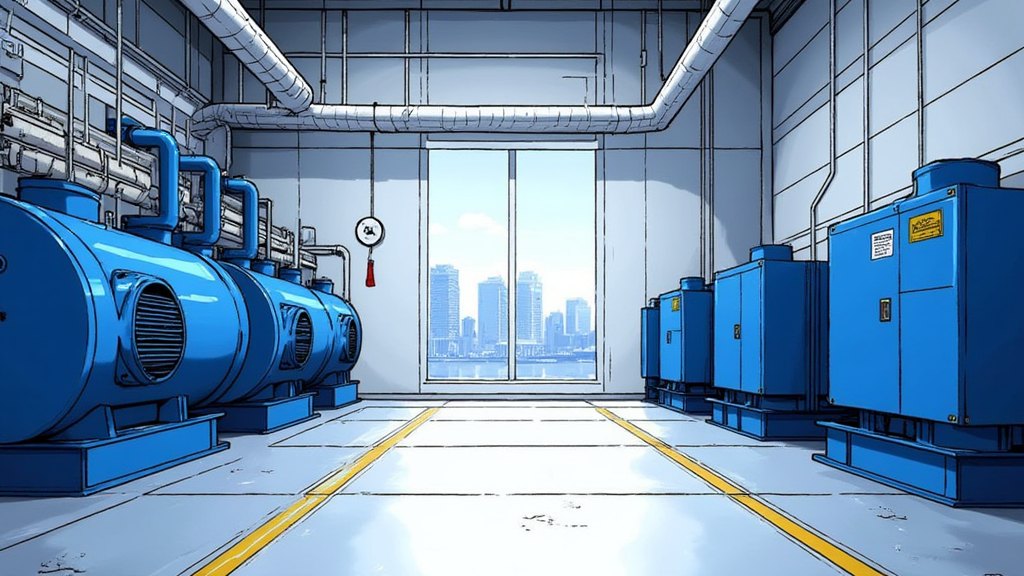
District cooling by using absorption chillers
Using the waste heat in absorption chillers to chill water from heat instead of electricity, then feed it into a district cooling network, such as in Marina Bay.
Desalination
By using reactor heat to distill seawater, which complements Singapore’s desalination plants and also enhances our water resilience. Already achieved in Kazakhstan, Japan and India.
Cold storage
No, not the supermarket franchise. I’m referring to a steadily running reactor with a chilled-water tank ready to release its contents to the buildings on the network upon demand.
Industrial steam for Jurong Island
By channeling the waste heat into Jurong Island’s chemical plants for their use. In fact, Jurong Island already pipes waste steam from neighboring power plants to power their processes.
Nuclear fusion
Can we make science fiction a reality?
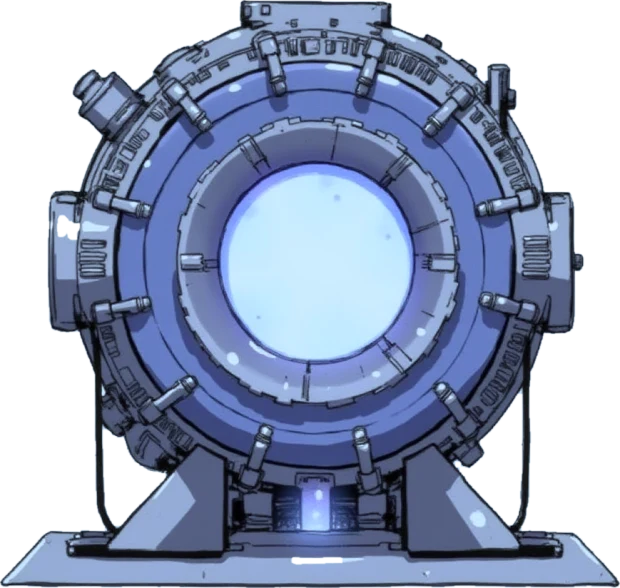
You probably have heard of the nuclear fusion reactor, which is heralded as the Holy Grail of clean energy. Harnessing the same reaction that powers the sun, nuclear fusion merges two light atomic nuclei into a new element, e.g. hydrogen to helium. The resultant energy it releases is immense, and there is abundant fuel for it—the deuterium it uses can be easily extracted from seawater. Moreover, it produces far less and shorter-lived radioactive waste compared to fission reactors. Like fission reactors, fusion reactors also promise clean energy as they do not produce any carbon emissions.
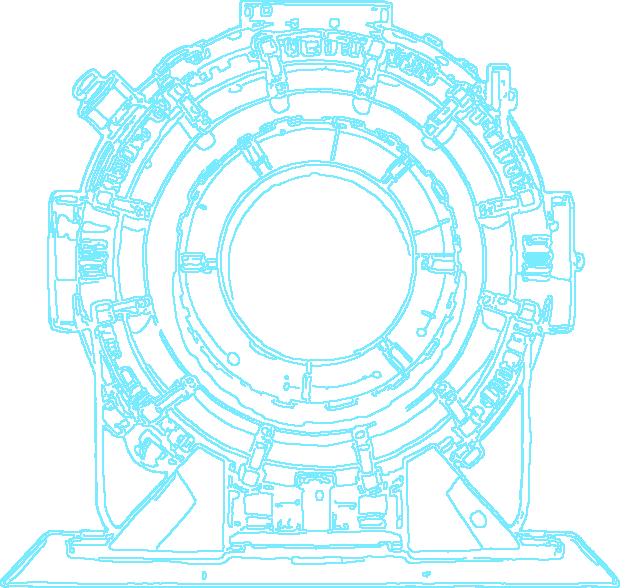
The issue, though, is creating a sustainable confinement device that can withstand the plasma created. Plasma is a fourth state of matter, formed when gases are heated to a few thousand degrees Celsius. However, in a fusion reactor, it is heated to temperatures way beyond that—over 100 million degrees Celsius—and currently, no physical matter can contain it. Therefore, creating a fusion reactor means relying on something like a tokamak, which uses powerful magnetic fields to suspend and control plasma.
Where does Singapore come in?
Though not a part of ITER, Singapore is involved in various nuclear fusion projects. The Nanyang Technological University has a $6 million professorship funded by Temasek in 2021,[^53] and the National Research Foundation funds an $11.6 million fusion program that runs plasma simulations.[^54] Temasek has also invested in Commonwealth Fusion Systems,[^55][^56] who A*STAR also signed a five-year deal with to develop technology for commercial plants.[^57]
Singapore might not be building its own fusion power in the near future, but by investing in the companies and building the skills needed, who’s to say we won’t in the far future? With the Energy Market Authority studying the feasibility of using sites on Pulau Tekong to build hydrogen-ready natural gas plants in the 2030s,[^63] it’s likely that these will eventually be retired around the 2060s. By then, it’s possible we will have developed usable nuclear fusion technology, and we can replace those plants with fusion reactors. By reusing the land—reserved for heavy energy use and a good distance from residential areas—as well as the existing grid connections, steam turbines and seawater cooling, it’s plausible that we can replace those gas plants with fusion—and the plants built for hydrogen will already be handling the necessary fuel for nuclear reactors that run on hydrogen-boron fusion. Clean energy within the next five decades!
This is a simplified plasma simulation that shows how a tokamak works. Our simulation allows you to change the heat and density, and swap between two machines. Real simulations have far more settings for their magnets, though. They allow researchers to run the same plasma under the different strengths of magnetic fields, to see if they can achieve the same plasma containment results with smaller machines than ITER.
Machine figures: ITER,[^61] SPARC.[^62] We use average values across the plasma, but note that real plasmas are hotter and denser at the core.
A fusion reactor that loses control simply peters out instead of melting down, as there is no chain reaction. This makes it comparatively safer than fission reactors, where a rampaging chain reaction or heat-emanating fuel despite shutdown can lead to a meltdown.
Nuclear disaster in popular imagination
Films, games and literature depicting nuclear apocalypses or the threat of one are important because they are expressions of social anxieties the public faces when confronted with nuclear technologies and disasters.
Use the arrow keys to walk. Press E for breath attack.
Arrow keys to walk · E for breath attack · Esc to close
References
- National Museum of Nuclear Science & History (Atomic Heritage Foundation). “Chicago Pile-1.” Accessed September 23, 2026.
- Nobel Prize Outreach. “The Nobel Prize in Physics 1938.” NobelPrize.org. Accessed September 27, 2026.
- National Museum of Nuclear Science & History (Atomic Heritage Foundation). “Trinity Test — 1945.” Accessed September 23, 2026.
- Moran, Patrick Healy. “Orders of Magnitude.” Nuclear Weapons Education Project, Massachusetts Institute of Technology. Accessed September 27, 2026.
- National Museum of Nuclear Science & History (Atomic Heritage Foundation). “Bombings of Hiroshima and Nagasaki — 1945.” June 5, 2014.
- City of Hiroshima. “The Realities of the Atomic Bombing.” Accessed September 23, 2026.
- Manhattan Engineer District. “The Atomic Bombings of Hiroshima and Nagasaki,” chapter 10, “Total Casualties.” 1946. The Avalon Project, Yale Law School. Accessed September 27, 2026.
- National Museum of Nuclear Science & History (Atomic Heritage Foundation). “Castle Bravo.” March 1, 2017.
- Burr, William, ed. “Castle BRAVO at 70: The Worst Nuclear Test in U.S. History.” National Security Archive, George Washington University, February 29, 2024.
- National Museum of Nuclear Science & History (Atomic Heritage Foundation). “Gojira (1954).” November 14, 2018.
- International Atomic Energy Agency. “From Obninsk Beyond: Nuclear Power Conference Looks to Future.” Accessed September 23, 2026.
- World Nuclear Association. “Nuclear Power in Russia.” Accessed September 23, 2026.
- Rabl, Thomas. “The Nuclear Disaster of Kyshtym 1957 and the Politics of the Cold War.” Arcadia, no. 20 (2012). Rachel Carson Center for Environment and Society.
- Wakeford, Richard. “The Windscale Reactor Accident—50 Years On.” Journal of Radiological Protection 27, no. 3 (2007): 211–215.
- Associated Press. “Info Withheld on Nuclear Accident, Papers Show.” Index-Journal (Greenwood, SC), January 3, 1989, 13.
- Yale Law School, Lillian Goldman Law Library. “Treaty Banning Nuclear Weapon Tests in the Atmosphere, in Outer Space and Under Water; August 5, 1963.” The Avalon Project. Accessed September 23, 2026.
- National Museum of Nuclear Science & History (Atomic Heritage Foundation). “Limited or Partial Test Ban Treaty (LTBT/PTBT).” June 10, 2016.
- U.S. Nuclear Regulatory Commission. “Backgrounder on the Three Mile Island Accident.” Accessed September 23, 2026.
- Hultman, Nathan, and Jonathan Koomey. “Three Mile Island: The Driver of US Nuclear Power’s Decline?” Bulletin of the Atomic Scientists 69, no. 3 (2013): 63–70.
- International Atomic Energy Agency. “Chernobyl: The True Scale of the Accident.” Press release 2005/12, September 4, 2005.
- United Nations Scientific Committee on the Effects of Atomic Radiation. “The Chornobyl Accident.” Accessed September 23, 2026.
- James Martin Center for Nonproliferation Studies. “Southeast Asia Nuclear-Weapon-Free Zone Treaty (Treaty of Bangkok).” Inventory of International Nonproliferation Organizations and Regimes. Last updated June 12, 2009.
- ASEAN Secretariat. “Treaty on the Southeast Asia Nuclear Weapon-Free Zone.” Bangkok, December 15, 1995.
- International Atomic Energy Agency. “Fukushima Daiichi Nuclear Accident.” Accessed September 23, 2026.
- Fukushima Prefectural Government. “Transition of the Number of Evacuees.” Fukushima Revitalization Information Portal. Updated August 17, 2026.
- Tabuchi, Hiroko. “Japan Premier Wants Shift Away From Nuclear Power.” New York Times, July 13, 2011.
- United Press International. “60,000 Protest Japan’s Plan to Restart Nuclear Power Plants.” June 2, 2013.
- Asahi Shimbun. “Abe Dismisses Koizumi’s Call for Zero Nuclear Power Plants.” Asia & Japan Watch, October 25, 2013.
- CNA. “Japan Restarts Operations at World’s Largest Nuclear Plant, 15 Years after Fukushima Disaster.” May 21, 2026.
- Crutzen, Paul J., and Eugene F. Stoermer. “The ‘Anthropocene.’” IGBP Global Change Newsletter, no. 41 (May 2000): 17–18.
- International Union of Geological Sciences and International Commission on Stratigraphy. “The Anthropocene.” Joint statement, March 20, 2024.
- McCarthy, Francine M. G., R. Timothy Patterson, Martin J. Head, et al. “The Varved Succession of Crawford Lake, Milton, Ontario, Canada as a Candidate Global Boundary Stratotype Section and Point for the Anthropocene Series.” The Anthropocene Review 10, no. 1 (2023): 146–176.
- Krall, Lindsay M., Allison M. Macfarlane, and Rodney C. Ewing. “Nuclear Waste from Small Modular Reactors.” Proceedings of the National Academy of Sciences 119, no. 23 (2022): e2111833119.
- Jacob, Charmaine. “Small Nuclear Reactors a Viable Option for Singapore, but Managing Waste Is Key: Energy Experts.” CNA, February 19, 2025.
- SCK CEN. “MYRRHA.” Belgian Nuclear Research Centre. Accessed September 28, 2026.
- Urban Redevelopment Authority. “Master Plan 2019 Subzone Boundary (No Sea).” Data.gov.sg. Accessed September 28, 2026. Made available under the Singapore Open Data Licence.
- Department of Statistics, Singapore. “Singapore Residents by Planning Area / Subzone, Age Group, Sex and Type of Dwelling, June 2026.” Released September 25, 2026. Accessed September 28, 2026.
- Natural Earth. “Land,” 1:10m Physical Vectors. Public domain. Accessed September 28, 2026.
- World Nuclear News. “US Regulator Approves Methodology for SMR Emergency Planning.” October 28, 2022.
- World Nuclear Association. “Nuclear Power Reactors.” Information Library. Accessed September 28, 2026.
- Energy Market Authority. “Energy Transformation.” Singapore Energy Statistics, chap. 2. Accessed September 28, 2026.
- CEA, Institute for Magnetic Fusion Research. “WEST Sets a New Plasma Duration Record.” February 19, 2025.
- Chinese Academy of Sciences. “Chinese ‘Artificial Sun’ Sets New Record in Milestone Step Toward Fusion Power Generation.” January 21, 2025.
- Lawrence Livermore National Laboratory, National Ignition Facility & Photon Science. “Target Breakthrough Enabled Fusion Record at NIF.” Accessed September 29, 2026.
- Liu, Jiaxing, Ping Zhu, Dominique Franck Escande, et al. “Accessing the Density-Free Regime with ECRH-Assisted Ohmic Start-Up on EAST.” Science Advances 12, no. 1 (2026): eadz3040.
- South China Morning Post. “Chinese Commercial Reactor Achieves Nuclear Fusion with Clean Hydrogen-Boron Fuel.” September 29, 2026.
- Commonwealth Fusion Systems. “SPARC: Proving Commercial Fusion Energy Is Possible.” Accessed September 29, 2026.
- Chinese Academy of Sciences. “China Achieves Milestone in Compact Fusion Project with Key Component Installation.” October 10, 2025.
- Helion Energy. “Helion Announces World’s First Fusion Energy Purchase Agreement with Microsoft.” Press release, May 10, 2023.
- Helion Energy. “Helion Clears Key Regulatory Milestone on the Path to Building and Operating the World’s First Fusion Power Plant.” June 16, 2026.
- Max Planck Institute for Plasma Physics. “New ITER Schedule.” July 3, 2024.
- ITER Organization. “New Baseline to Prioritize Robust Start to Exploitation.” July 3, 2024.
- Nanyang Technological University. “New Chair Professorship with $6 Million Endowment from Temasek.” September 29, 2021.
- National Supercomputing Centre Singapore. “Powering the Future: Singapore’s Path into Fusion Energy.” Accessed September 29, 2026.
- Commonwealth Fusion Systems. “Commonwealth Fusion Systems Raises $84 Million in A2 Round.” May 26, 2020.
- Commonwealth Fusion Systems. “Commonwealth Fusion Systems Raises $1.8 Billion in Funding to Commercialize Fusion Energy.” December 1, 2021.
- The Straits Times. “World’s Largest Nuclear Fusion Firm Partners A*STAR to Develop Commercial Power Plant Tech.” May 20, 2026. Republished by the Singapore Economic Development Board.
- Bosch, H.-S., and G. M. Hale. “Improved Formulas for Fusion Cross-Sections and Thermal Reactivities.” Nuclear Fusion 32, no. 4 (1992): 611–31.
- Troyon, F., R. Gruber, H. Saurenmann, S. Semenzato, and S. Succi. “MHD-Limits to Plasma Confinement.” Plasma Physics and Controlled Fusion 26, no. 1A (1984): 209–15.
- Greenwald, M., J. L. Terry, S. M. Wolfe, et al. “A New Look at Density Limits in Tokamaks.” Nuclear Fusion 28, no. 12 (1988): 2199–2207.
- Aymar, R., P. Barabaschi, and Y. Shimomura. “The ITER Design.” Plasma Physics and Controlled Fusion 44, no. 5 (2002): 519–65.
- Creely, A. J., M. J. Greenwald, S. B. Ballinger, et al. “Overview of the SPARC Tokamak.” Journal of Plasma Physics 86, no. 5 (2020): 865860502.
- “A Pulau Tekong Site 40% the Size of Sentosa Could Become an Energy Hub, EMA to Study Feasibility.” CNA, October 6, 2026.
- Lamarre, Thomas. “Born of Trauma: Akira and Capitalist Modes of Destruction.” positions: east asia cultures critique 16, no. 1 (2008): 131–156.
- Napier, Susan J. Anime from Akira to Howl’s Moving Castle: Experiencing Contemporary Japanese Animation. Updated ed. New York: Palgrave Macmillan, 2005.